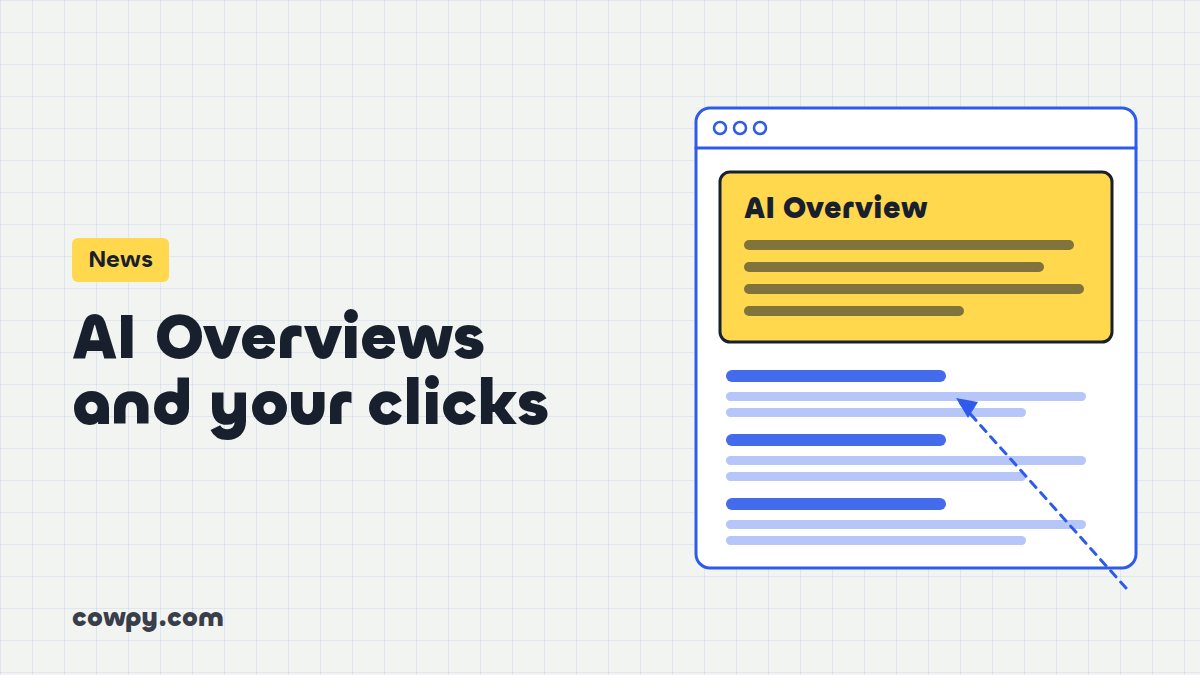
AI Overviews take about 4 in 10 clicks. What the research says and what to do about it
If your Google traffic has slipped while your rankings look the same, you are not imagining it. When Google answers a question with an AI summary at the top of the page, fewer people scroll down and click a website.
For a long time that was a feeling backed by screenshots and angry forum posts. In 2026 we finally have proper research, including a randomized experiment. Here is what it found, where the numbers disagree, and what it means if you run a website that lives on search traffic.
The strongest study so far: about 40 percent fewer clicks
Two researchers, Saharsh Agarwal from the Indian School of Business and Ananya Sen from Carnegie Mellon University, ran a field experiment with 1,065 people using Chrome on desktop. A browser extension randomly split them into groups: some saw Google as normal, some had the AI Overviews hidden, and some were sent to Google’s AI Mode instead.
Over two weeks in January and February 2026 they recorded more than 68,000 searches. AI Overviews appeared on about 41 percent of them.
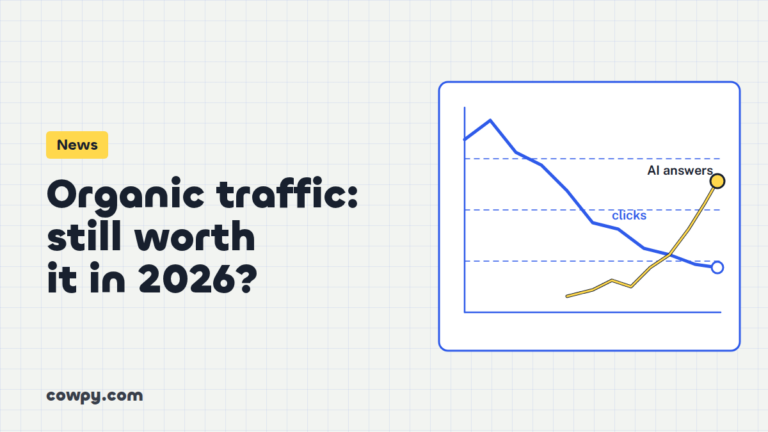
The result is hard to argue with. When an AI Overview was shown, clicks to websites from the normal results fell by 39.8 percent, and searches where nobody clicked anything rose by 34.5 percent. Clicks on ads did not change at all.
Two details matter just as much. People who did click behaved the same in both groups: same bounce rate, same time on page. And people were not happier with the AI answers. Satisfaction scores were the same with or without the overview. In other words, the summaries take clicks away without making the search experience better.
The paper was posted in April 2026 and has not been peer reviewed yet, so treat the exact number with some care. The direction, though, matches everything else we know.
Other studies point the same way
Pew Research Center tracked the real browsing of 900 American adults in March 2025. When a page had an AI summary, people clicked a normal search result on 8 percent of visits. Without a summary they clicked on 15 percent. Links inside the summary itself got clicked on just 1 percent of visits.
The same experiment above also tested AI Mode, where Google answers in a chat-style page. Clicks dropped further there, and people rated the experience clearly worse. The researchers call that part exploratory because more participants dropped out.
Large publishers report even bigger losses for some queries, but those are worst cases from the people hurt most, not averages.
There is one bright spot. Searches for a brand name behave differently: when someone types your site’s name, an AI Overview does not stop them from clicking through, and some data even shows click-through going up.
What Google says it is doing
In May 2026 Google announced changes to AI Overviews and AI Mode meant to send more visitors to websites, including a section of further links and clearer labels on sources. Whether that wins back meaningful traffic is not clear yet, and Google has not published numbers that would let anyone check.
What this means if you run a website
The practical lesson is simple: a site that depends on strangers finding it through generic Google searches is now running on a shrinking resource. That does not mean search is dead. It means the sites that do well from here are the ones people ask for by name.
Here is what we would focus on.
- Be the brand people search for. Branded searches still get clicked. A memorable name, a clear point of view and real work behind your content all turn anonymous visitors into people who come back on purpose.
- Own your audience. An email list does not depend on any algorithm. Every visitor who signs up is one you can reach again for free.
- Write what an AI summary cannot. First-hand tests, original photos, your own numbers and honest opinions are hard to compress into three lines. Generic answers to simple questions are exactly what the overviews replace.
- Target questions that need a website. Comparisons, tools, calculators and step-by-step projects still get clicks, because the answer does not fit in a summary.
- Spread your traffic. YouTube, Pinterest, newsletters, communities and partnerships all send visitors that Google cannot take away.
If you are planning a new site, it is worth running the numbers with a lower click rate than you would have used two years ago. Our earnings calculator lets you play with traffic and income assumptions before you build anything.
Sources
- Researchers find Google AI Overviews cut publisher clicks 39.8%, PPC Land, on the Agarwal and Sen field experiment
- Google AI Mode cuts clicks without boosting satisfaction: Study, Search Engine Land
- Pew: AI summaries cut Google click-throughs to 8% from 15%, AI Weekly
- Google updates AI Overviews with Further Exploration links, The Next Web