Expired domains – how to check one, where to buy it and when to 301 redirect
An expired domain is a name someone owned, used and then let go. Some of them come with years of history: links from other sites, a known name, sometimes even leftover traffic. That history is why people buy them, and also why you need to be careful.
Done well, an aged domain can give a new project a head start. Done badly, it brings someone else’s spam problems with it. Here is how to check one, where to buy it and how to use it.
What Google actually says
Since March 2024, Google’s spam policies include something called expired domain abuse. It means buying an old domain mainly to rank low-value content on the strength of its past, for example turning a former school website into a casino affiliate site.
Buying an expired domain is not against the rules. What Google looks at is what you do with it. A domain that keeps its topic and gets real, useful content is fine. A domain bought only for its links and filled with unrelated pages is what the policy targets.
How to check a domain before you buy
Spend half an hour on these checks. It can save you a lot of money.
- Look at its past in the Wayback Machine. Open archive.org and browse old snapshots. You want a real site on a topic close to yours. Red flags: casino or pharma content, foreign language spam, or the domain changing topic every year.
- Check its backlinks. Use Ahrefs, Semrush or Majestic. Good signs are links from real sites in your niche. Bad signs are thousands of links from unrelated sites, or link anchors full of spammy keywords.
- Search for it on Google. Type site: followed by the domain. If nothing shows up although the domain had a real site, it may have been penalized.
- Check the name itself. Make sure it does not contain a trademark you could get in trouble for, and that it is easy to say and remember.
Where to buy, and how to get a fair price
There are four main places to find expired and aged domains.
- Expired domain auctions. Registrars auction domains their owners did not renew. GoDaddy Auctions is the biggest. NameJet, DropCatch and Dynadot run auctions as well.
- Backorders. For a domain that is about to drop, you can place a backorder with services like DropCatch or SnapNames. If several people backorder the same name, it usually goes to auction.
- Marketplaces. Sedo and Afternic list domains that owners are actively selling. Prices are higher, but you can often negotiate.
- Private sellers. If a site you like has gone quiet, contact the owner directly. A domain someone has forgotten about is often cheaper than one listed for sale.
To keep the price fair: decide your maximum before the auction starts, avoid bidding wars in the last minutes, and compare similar sold domains first. Several marketplaces publish recent sales, which gives you a sense of what names like yours actually go for.
Relaunch it or 301 redirect it?
Once you own the domain, you have two good options.
Relaunch it as a real site. Best when the old site had its own audience and a topic you want to cover. Rebuild the most linked pages with fresh, useful content at the same addresses, so the old links point somewhere real again.
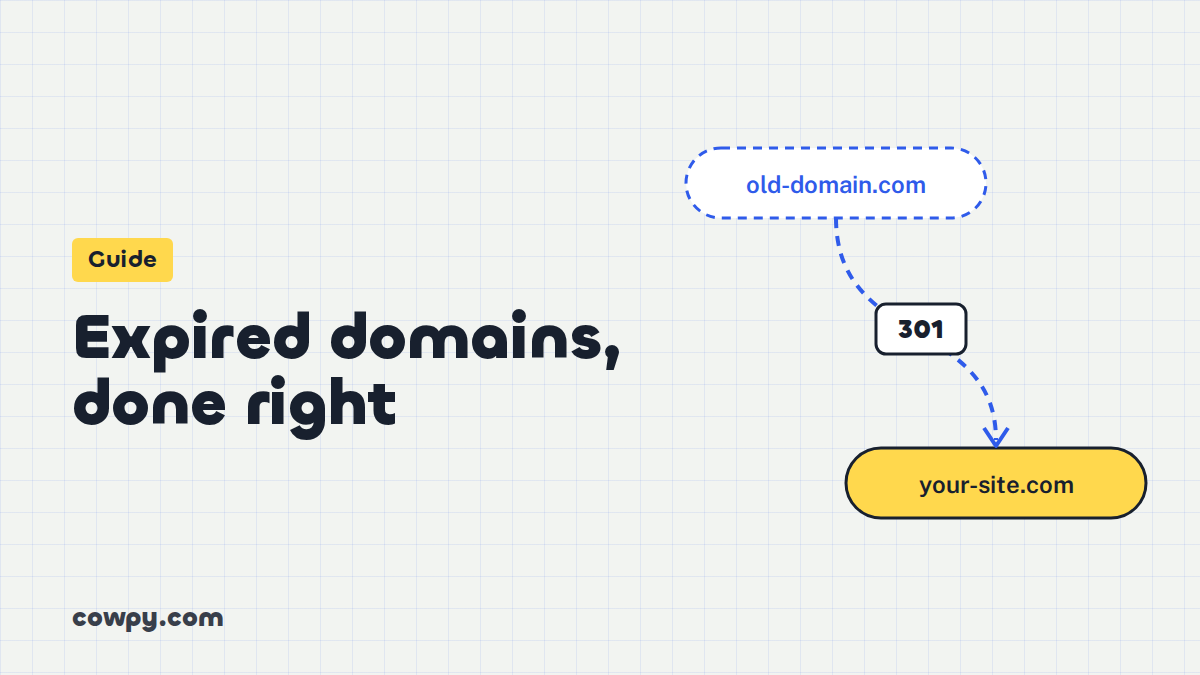
Redirect it to your main site. Best when the domain is closely related to a site you already run. A 301 redirect tells Google the old address has permanently moved, and passes along most of the value of its links. Redirect page by page where you can: the old guide about a topic should go to your guide on the same topic. Sending everything to your homepage wastes most of the value.
Whichever you choose, add the domain to Google Search Console right away and check for manual actions. If the previous owner earned a penalty, you want to know before you build on it.
One rule above all
Ask yourself: would this make sense if Google did not exist? A redirect from a closed shop that sold the same products as yours makes sense. Redirecting ten unrelated domains into your site just for their links does not, and that is exactly what Google’s link spam rules are written for.
If you want help finding, checking or using an aged domain, it is one of the extras we offer alongside a free website concept.